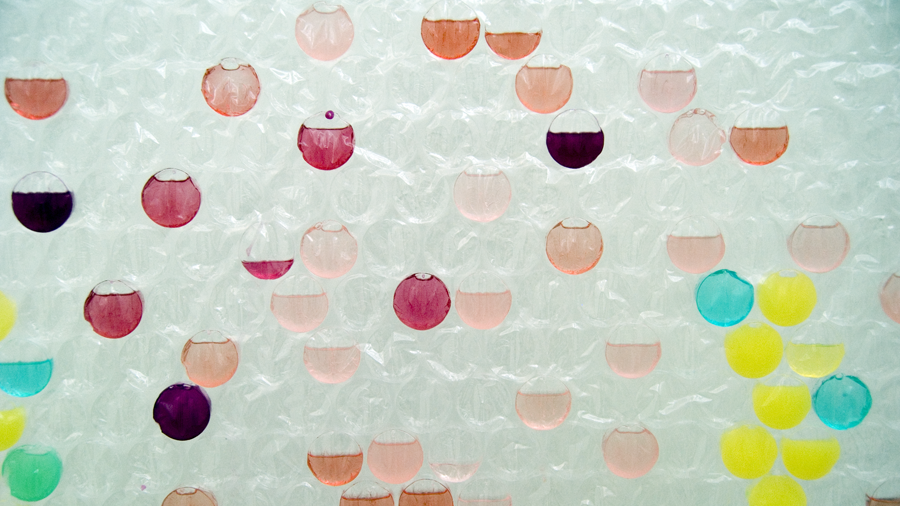
Shadow Biosphere, 2011
Man-made biodiversity to recover Earth’s lost species
New species to cleanse the planet
Climate change, a human population of 9 billion, the effects of deforestation and rising oceans will drive species to extinction. Scientists say three species of organisms become extinct every hour due to environmental pressures created by humans. Biodiversity is not just a green issue. It is vital as a life support system and we simply cannot exist without rich biodiversity. If we don’t act now, we will loose organisms which might become a solution to unforeseen disasters and diseases.
Will humans act to preserve biodiversity in time?
If not, how could we create new species of flora and fauna to regenerate Earth’s life support system?
Shadow Biosphere
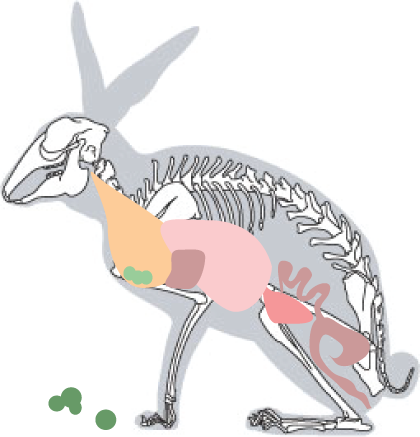
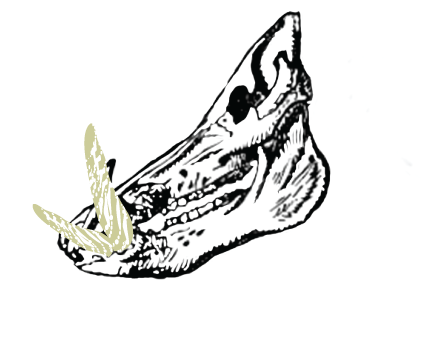
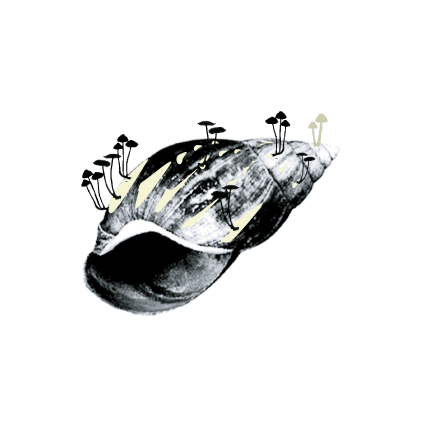
Within the Shadow Biosphere, new organisms will be tasked with erasing Man’s destructive effects and stabilise the planet’s life support. We propose that human’s will utilise emerging technology such as synthetic biology and phytoremediation to create novel chimeras and new organisms able to fill traditional and new environmental niches. |
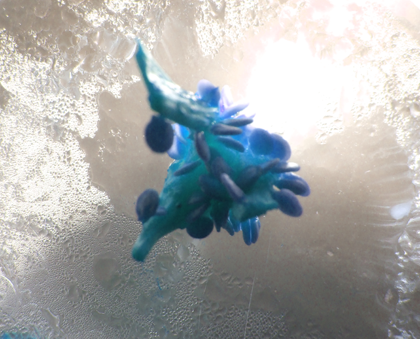 |
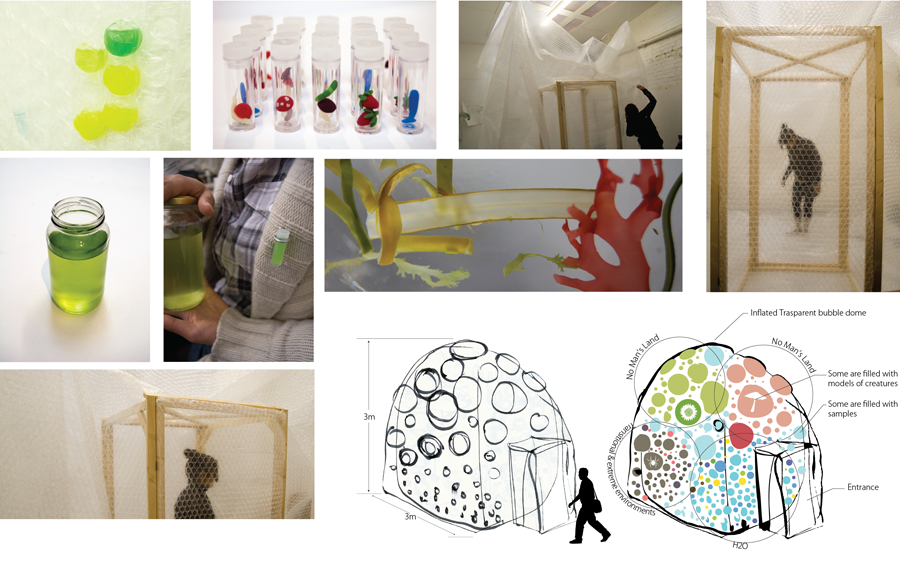
We created a inflated dome to host a collection of the Shadow Biosphere. This hosted specimens from our six taxonomic groups. It contained a mixture of real samples and models of man-made species of the future. We performed interactive cleasing teaceremony by inviting audience into the dome.
Inspiration for the project comes from the scientific sampling expeditions of the 19th Century and those that continue today with the scientist, Craig Venter’s, Ocean Sampling Expedition. The emerging sciences we investigate include : Phytoremediation, Synthetic Biology, Genetic Engineering and Nanotechnology.
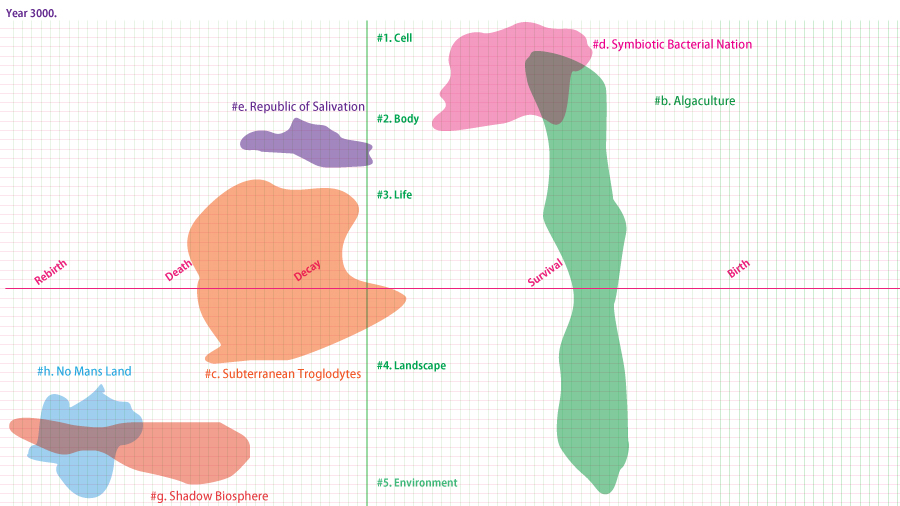
Six areas of shadow biospheres
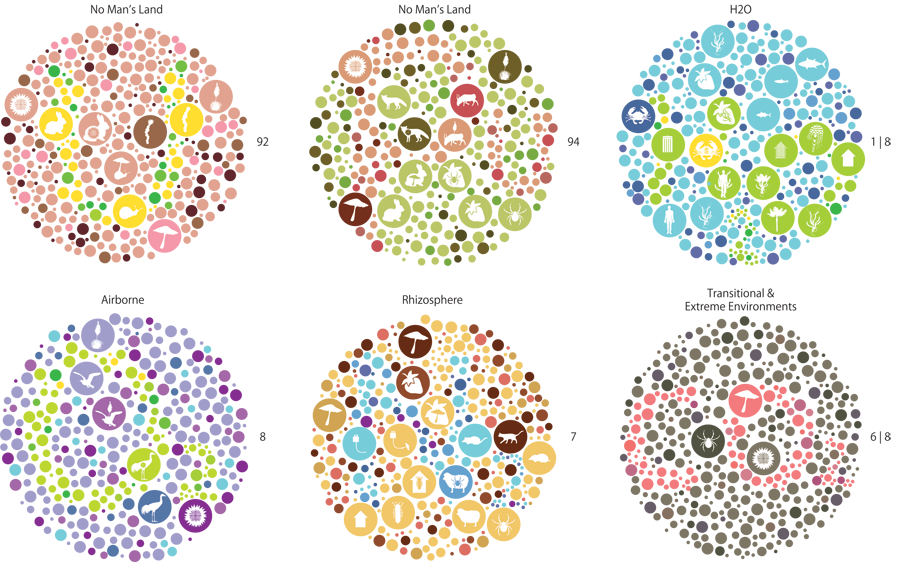
Map of relationship between six areas
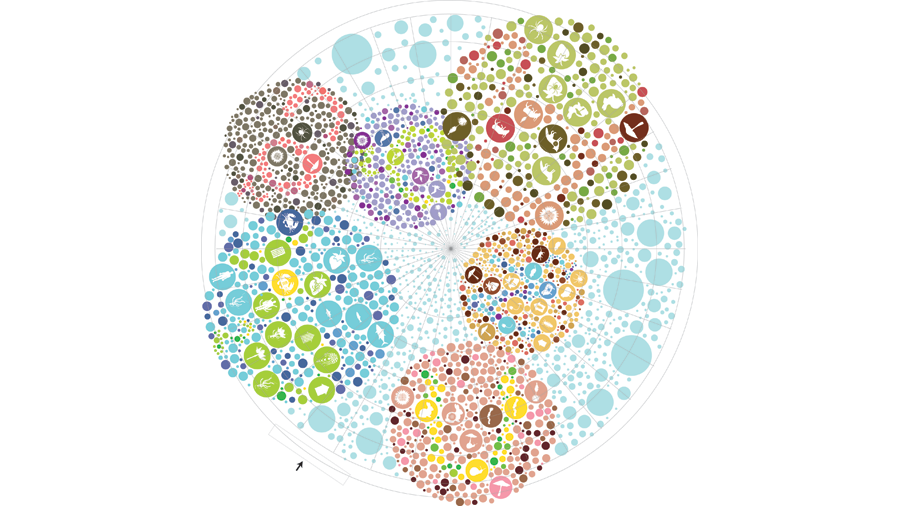
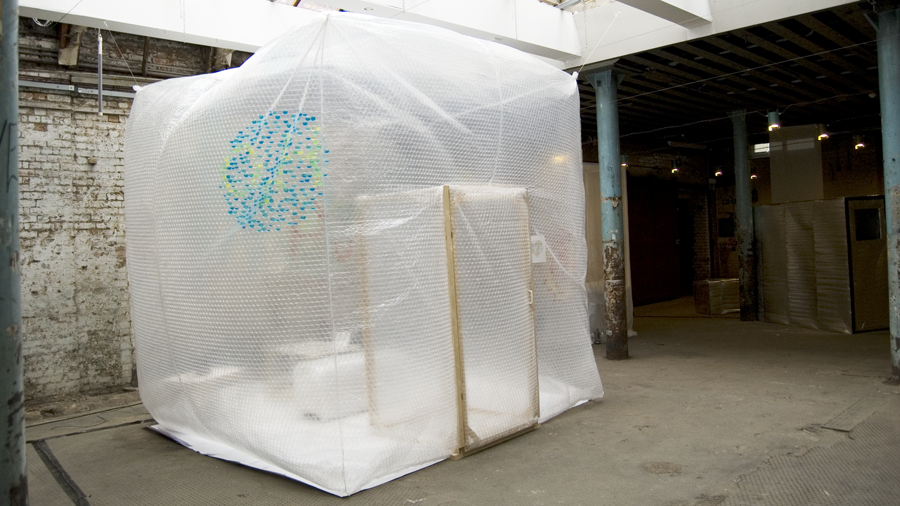
Shadow biosphere dome, where cleasing teaceremony took place inside.
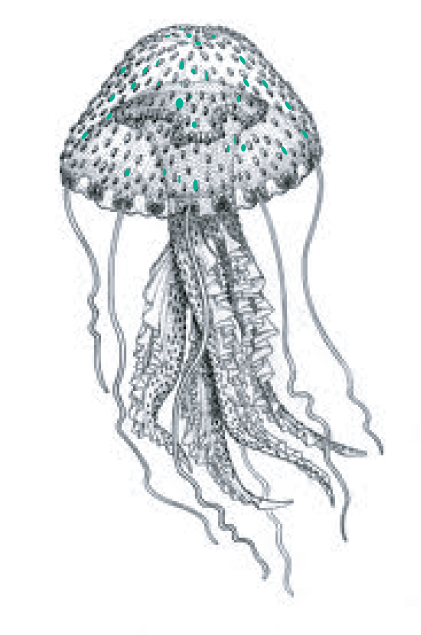
Shadow Biosphere creatures
NAME:
|
NAME:
|
NAME:
|
NAME:
|
Film showing the activity happened in the dome
Shado Biosphwere is a part of the bigger project After Agri, an investigation into future evolutions to our food systems.
After Agri reflects the rich tapestry of how food has shaped human evolution, cultures and environments. The project draws on varied areas of science, from nutrigenomics to geophysics, to give an insight into how the body and city has naturally developed to our most basic and primal need – eat and survive. Based on this research, it looks into a future of how humans might re-design their relationship with fuelling the body through physical enhancements and redesigning culture. To bring these scenarios to life, we create pieces featuring a feast after agriculture, using filmic storytelling, graphics, animation, designed artefacts, costume and performance. It features artefacts and designed systems from each of the scenarios below and diagrammatic maps of the food cultures in the future.
Other cultures in After Agri


