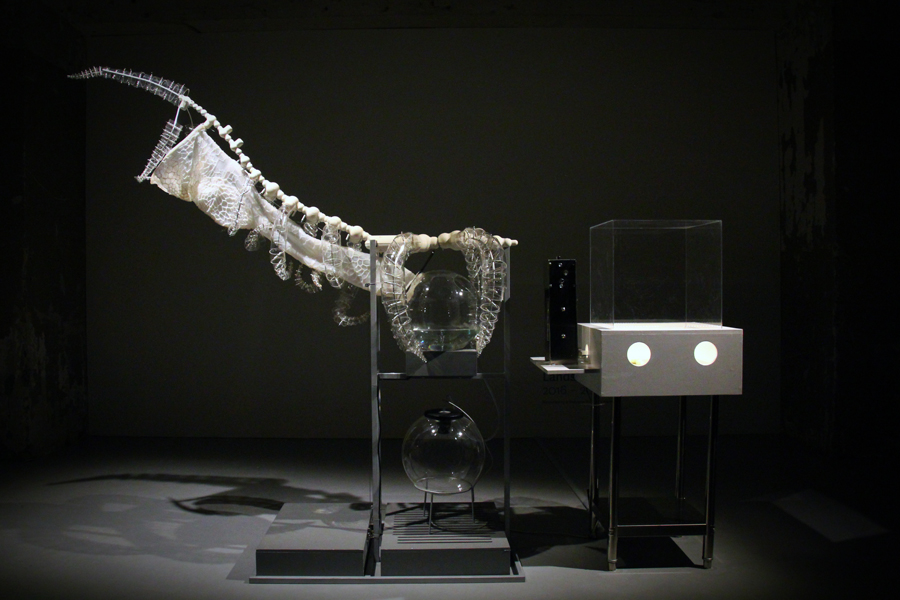
Landscape Within, 2016/17
|
Landscape Within updates the popular saying ‘you are what you eat’ to propose that ‘you are also where your food is grown, the landscape where you live and what your parents and grandparents were exposed to in their lifetime’. The research reveals how our bodies and minds change with heavy metal contamination from industrial activity and waste. The work presents new machine systems and world views incorporating plants, engineered bacteria, food, worms and frogs to help humans and non-humans adapt to future toxic landscapes. The work is supported by a Wellcome Arts Award and made in collaboration with Dr Louise Horsfall, and the Horsfall Lab at the University of Edinburgh and Dr Susan Hodgson, researcher and lecturer in Environmental Epidemiology and Exposure Assessment at Imperial College London. |
|
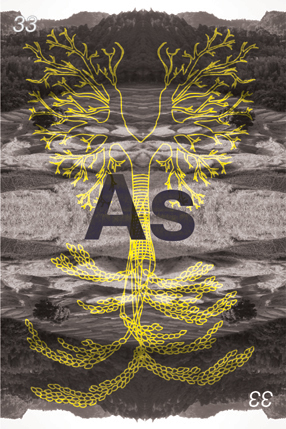
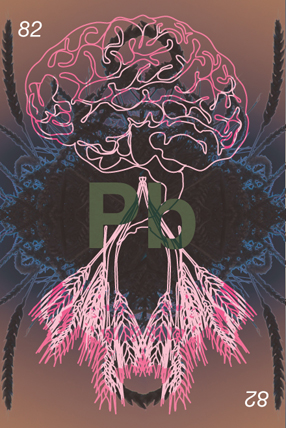
Some organisms both plants and animals, are extremely good at absorbing heavy-metals in their diets, such as hyper accumulating plants (See Instruments of the Afterlife). The Exposure Forecasting Records below are used by experts in the future to predict how your body and mind may change according to heavy-metals that you are exposed to when the landscape enters within your body.
 |
 |
Dr. Susan Hodgson, Environmental epidemiologist on health effect of contaminating metals
External Digestive Machine
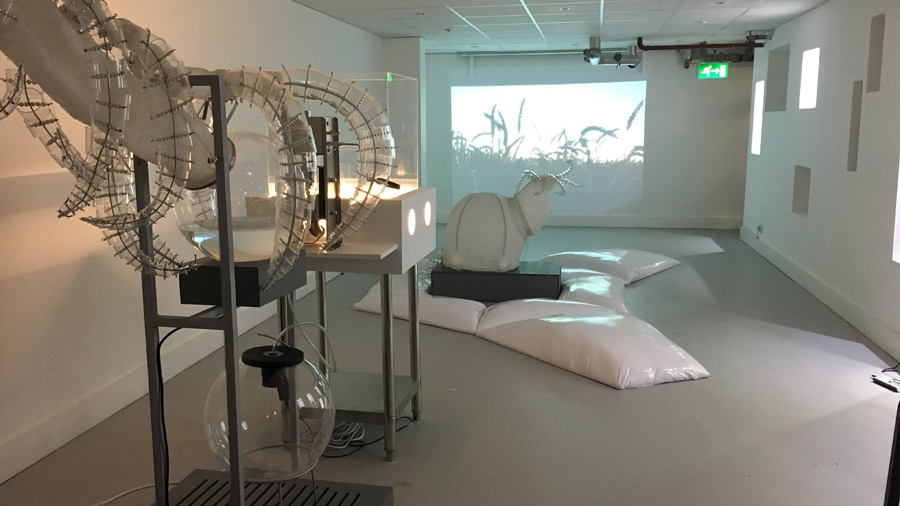
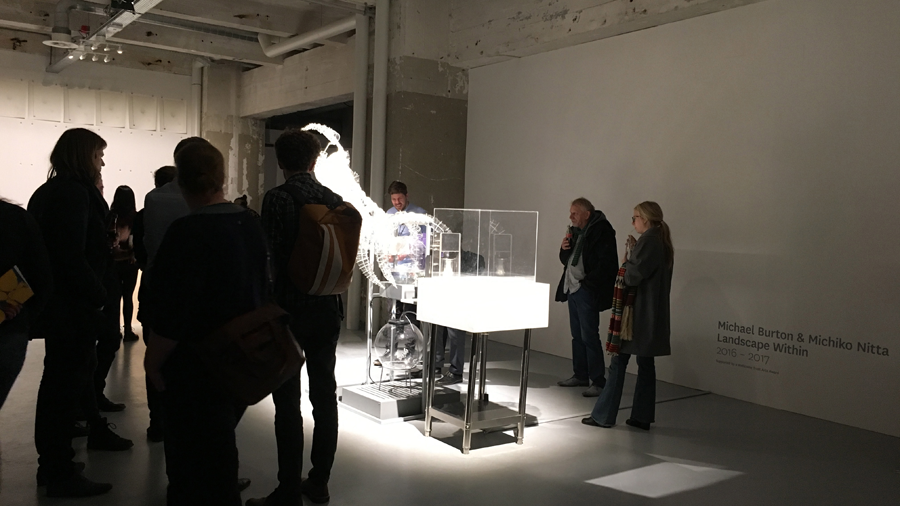
Landscape Within proposes a digestive machine that creates an external additional stage to our gut system. With future upgrades, the machine will move inside the body as an extra stomach organ. These gut enhancements ensure personality stability, counter aggressive behaviour, stimulate IQ development, trigger memories to combat dementia and promote a safe environment for social interaction for communities that have suffered isolation. The machine does this by using engineered bacteria designed to separate food from heavy metal contaminants, resulting in safe consumption and the nano-sized metals that are such a valuable resource. The machine’s ‘tube within a tube’ construction mirrors our own body plan. It enhances the gut, which as an organ is an early evolutionary development made to extract energy from our environment, and which links us to our animal ancestors. This highlights our digestive system as a crossroads between us and the landscape, the past and the future.
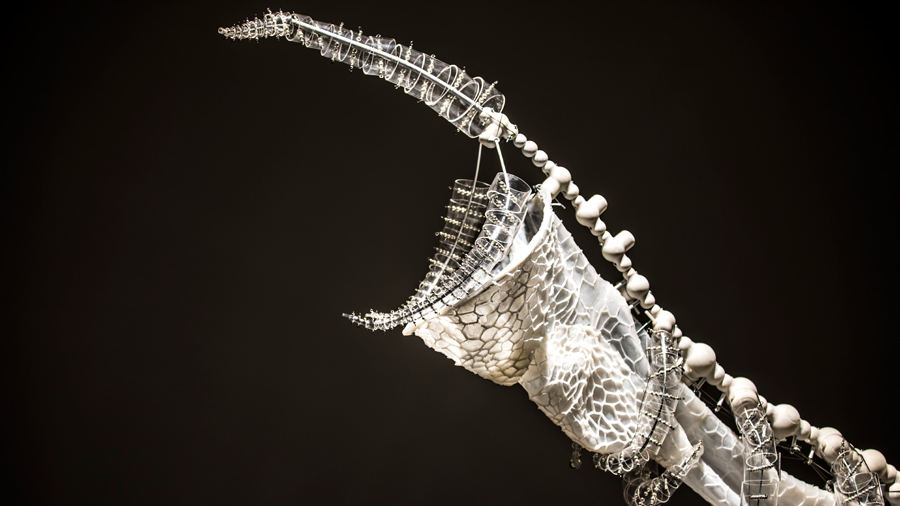 Digestive machine, Fluid Matter, Liquid and Life in Motion 2016 - 2017, MU artspace, Eindhoven NL. Photo by Hanneke Wetzer
Curated by Angelique Spaninks (MU) en William Myers (Jury Chairman Bio Art and Design Awards Bio Art and Design Awards)
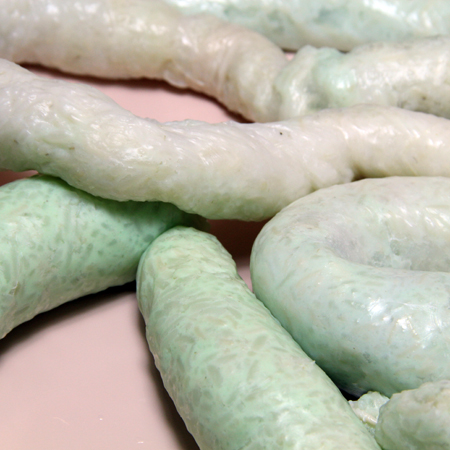
Rice sausages following arsenic extraction process
Edible engineered e-coli containing green fluorescent protein (GFP) within the sausage fluoresce after they finish the arsenic extraction process. Food such as the fluorescing rice sausage provides new dining possibilities and experiential sensations.
The Frogarium (Arsenic - As)
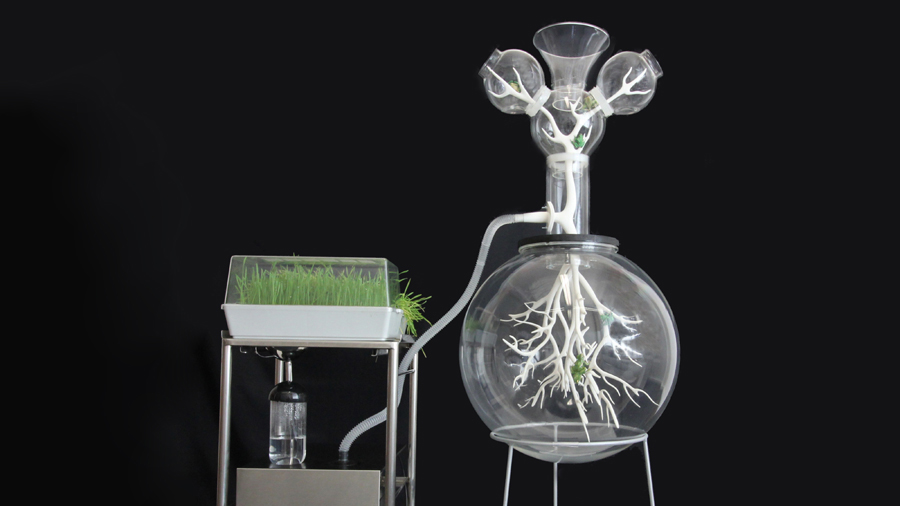
We face a future where a much-loved song has disappeared. No more warm summer nights listening to frogs singing in the rice fields. But the absence of the song is a stark warning. The decreasing number of amphibians correlates with rising levels of heavy metals in the fields. If the frogs are lost forever, how can we capture their song for future generations? The Frogarium is both a habitat for frogs and a device for retrieving the memory of frog song on a summer evening in the rice fields of Japan. It is designed for the home and to stimulate frogs to sing, preserving the experience for future generations. Functionally, the device samples water gathered from the rice fields and detects the levels of arsenic (As) present. If the water is safe, it is converted into a fog and pumped into the frog chambers. The Japanese tree frogs (Hyla japonica) that live in the upper chambers of the device sing when they feel moisture in the air. |
|
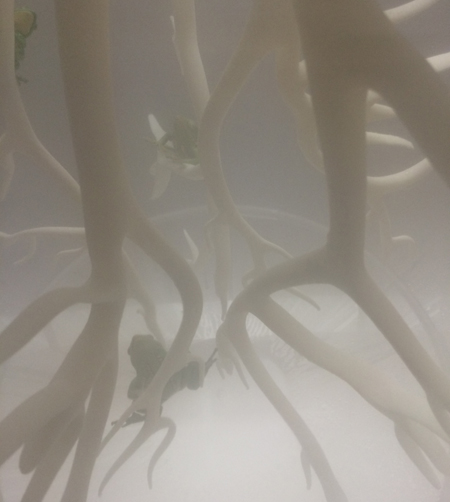
If arsenic is detected, the fogger is deactivated and the tree frogs stop singing. In this event, the second species of frog called the Waxy Monkey Frog (Phyllomedusa sauvagii), which is kept in another chamber, starts its defence mechanism. To prepare its body, the frog produces a secretion which it smears all over itself. This secretion has been found to contain two proteins that treat cancer and is collected by the owner to prepare for future health events, such as arsenic-induced cancer.
The Worm Charmer (Lead - Pb)
A woman breeds ‘super-earthworms’ to help clean the polluted landscape and protect her future grandchildren. She has developed a range of robots to retrieve her earthworms from the ground and to track their consumption of the heavy metals, including arsenic (As), lead (Pb), copper (Cu) and zinc (Zn). They also enable her to collect a specific protein called metallothioneins (MITs), which the earthworms produce to wrap up and seal off the harmful metals. The earthworms act as a biosensor to detect what heavy metals are present in the ground. The woman’s robots also revive a lost memory that her grandchildren may not experience. In her grandparents’ lifetime, large flocks of birds of diverse species gathered to feed in the fields. The flocks have diminished and some bird species have disappeared due to contamination and past crop-sprays such as DDT. Whilst her robots echo the lost birds, her worms work to decontaminate the land. |
|
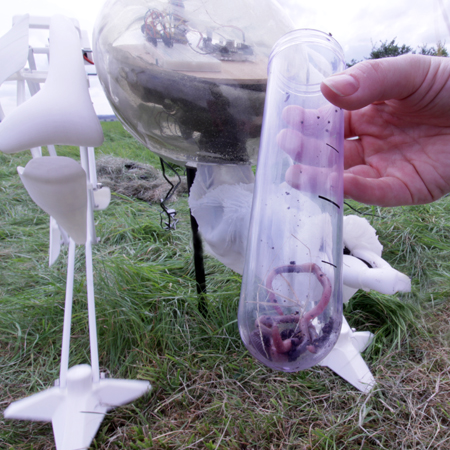
The humble earthworm has an evolutionary advantage allowing it to adapt to heavy metal contamination. It does this by producing the MITs protein, which enables the metal to be stored in the worm’s tissues or to pass through without harm. Newly evolved ‘super-worms’ have been found in the UK that are able to adapt to and eat patches of polluted industrial land high in arsenic (As), lead (Pb), zinc (Zn) and copper (Cu).
After the heavy metal has passed through the earthworm, it is less toxic and is converted into a form that makes it available to be absorbed by plants. As a result, the worm is a great bio-sensor of the heavy metals in the soil and provides us with ways to capture the nano-metals extracted from the body of the worm. To harvest worms from the soil, the robots make dance movements developed to produce vibrations that mimic rainfall and moles digging underground. In response, the worms flee to the surface, where the robots collect them for analysis. In addition to its role in harvesting the worms, the dance that controls the robots is important as it has been discovered that the choreographed movement raises IQ levels and combats the effects of lead (Pb) as a neurotoxin.
Worm Charmer performed and choreographed by Natasha Hubert
The New Gut Organ and Cloud Memory Table
The human gut is enhanced with a new organ that hosts engineered bacteria which extract heavy metal contamination from food. The bacteria convert the contamination into valuable nano-metals which can be used in industry, for instance, to make hydrogen fuel cells.
The new organ collects the nano-metals in specifically designed chambers that can be retrieved through surgery or after death. New remembrance rituals have emerged around this new organ and its abilities, where the nano-chambers and their contents collected over a person’s lifetime become symbolic and are used in domestic death memorials mirroring the ‘cloud shelf’ shrines of the Shinto religion. In this future time, the traditional representation of the deceased ancestor on the cloud shelf is replaced with a relic comprised of valuable nano-metals collected during their lifetime.
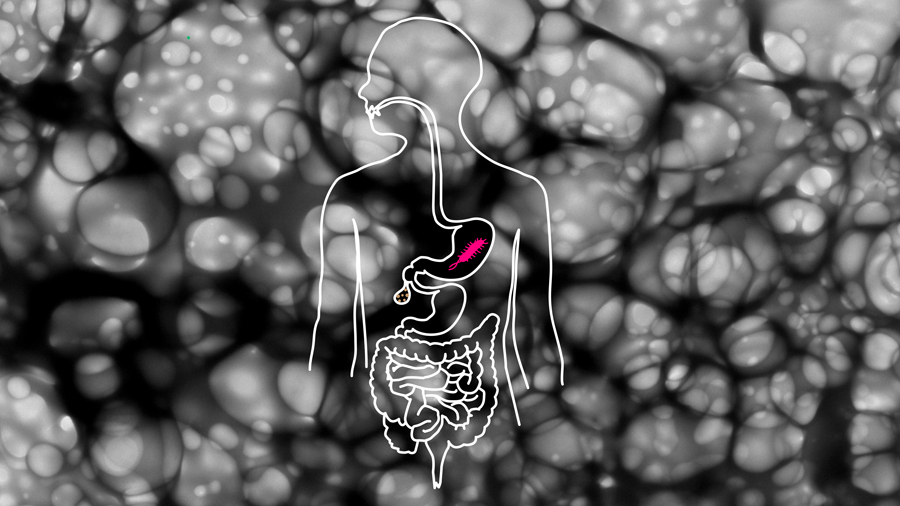
Landscape Within confronts the audience with our research finding: industrial contaminants produced since the Industrial Revolution can impact our bodies and minds in unexpected ways -the potential health consequences that our future generations might face. Inspired by philosopher Brian Thill, the work addresses the ultimate challenge, to “consider where these waste products go next; or what it means for us if there really is nowhere else to go”.
Set in a contaminated future landscape with limited options, this project questions adaptations humans and non-humans are required to take as our bodies remain in constant flux with the environment, challenging audiences to consider reshaping humanity to endure a world of our own making.
Acknowledgements
Landscape Within
by
Michael Burton & Michiko Nitta
In collaboration with
Biotechnology and Synthetic Biology,
University of Edinburgh
Environmental Epidemiology and Exposure Assessment
Supported by a Wellcome Trust Arts Award

and
 |
 |
 |
 |
 |
 |
|
 |
|


SHOWS
Old Truman Brewery, 7th - 10th September 2017
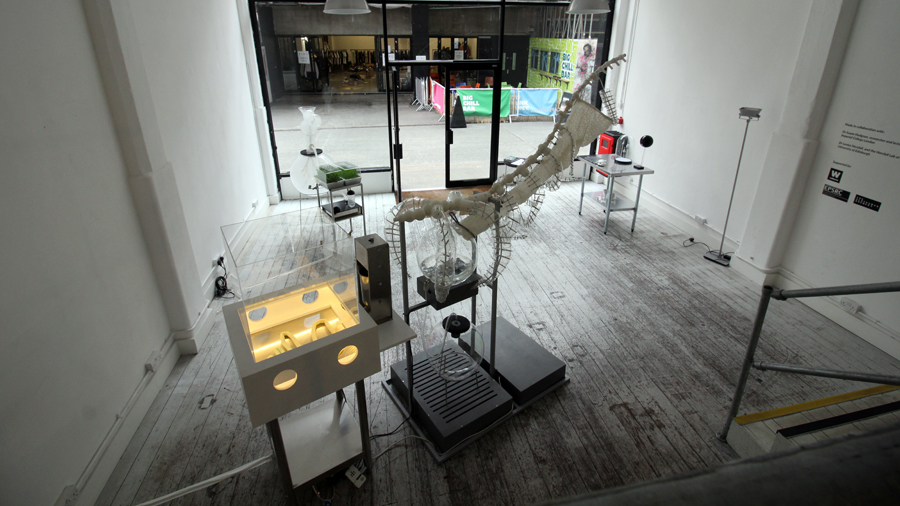
Westminster Reference Library, 19th - 22nd September 2017
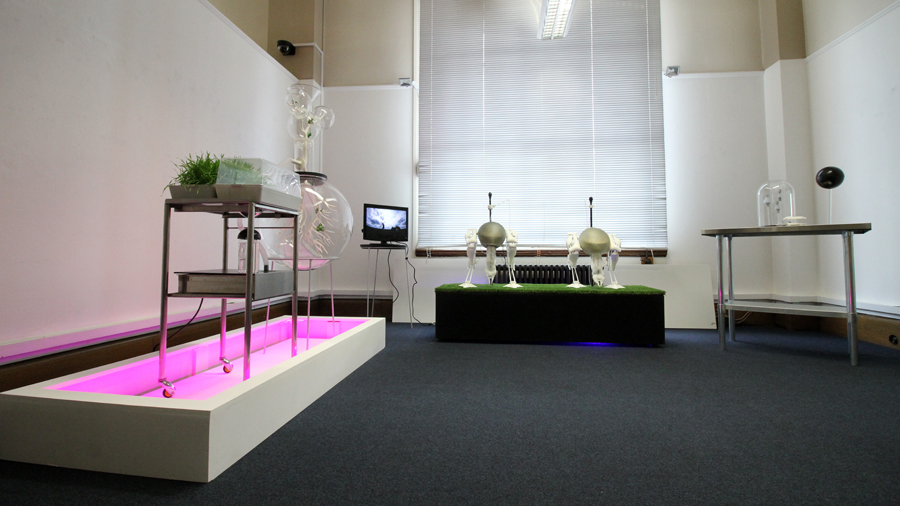
V&A London, 23 - 25 September 2016
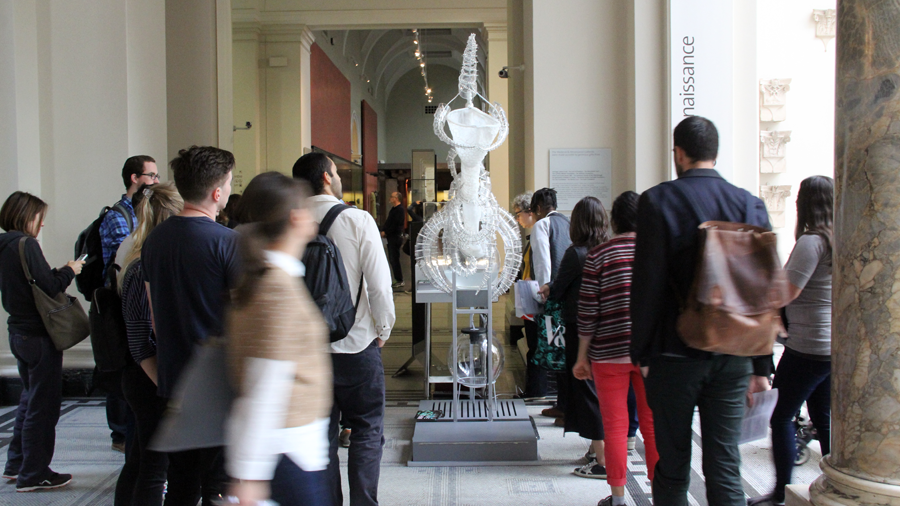
Tank Gallery, St Saviour's & St Olave's School, London, November - December 2016
MU Gallery, Eindhoven, December 2016 - February 2017
See also...

