BurtonNitta _____Projects by Michael Burton & Michiko Nitta
Food Fictions, 2017
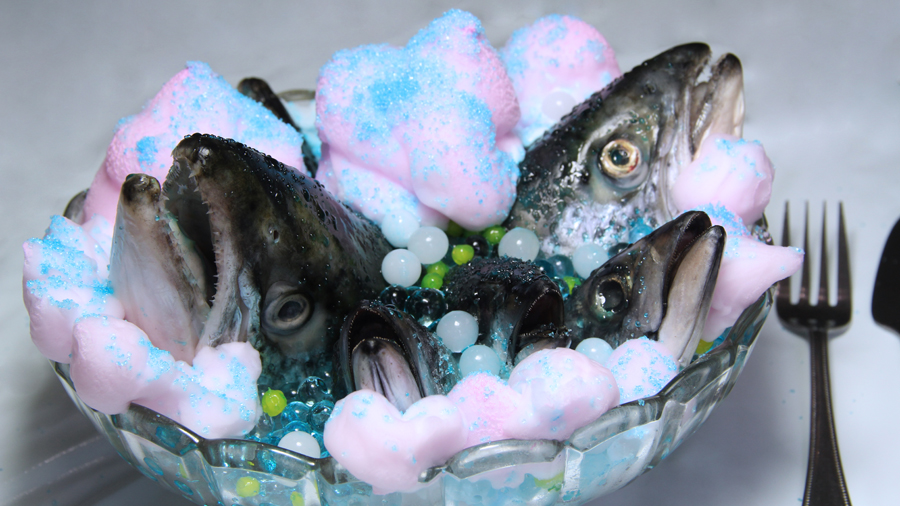
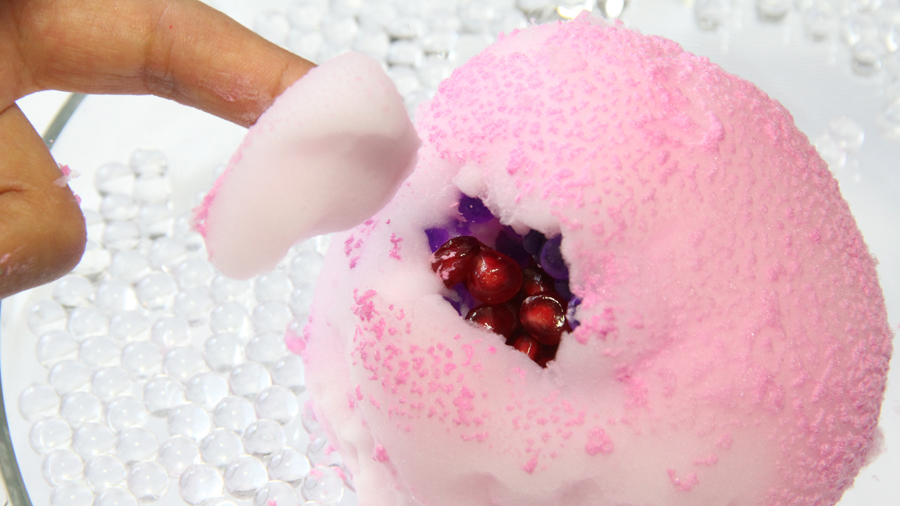
Food Fictions investigates our evolving relationship to what we eat, particularly in the social media and digital technology era.
Images of food can have surprisingly strong effects on us and our resulting behaviour. After all, we are reminded by Professor Charles Spence, from the University of Oxford that “we have evolved to find sources of nutrition in food-scarce environments.” So should we be more aware of how our sophisticated and subliminal sense around food imagery could have biological effects such as higher BMI or be used to influence our behaviour from politics to identity formation?
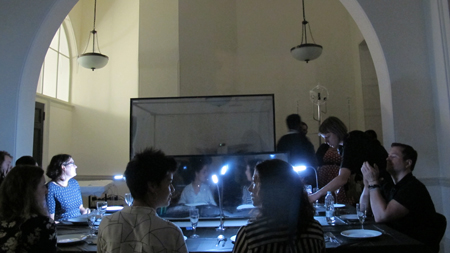
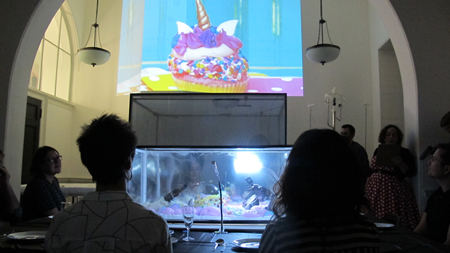
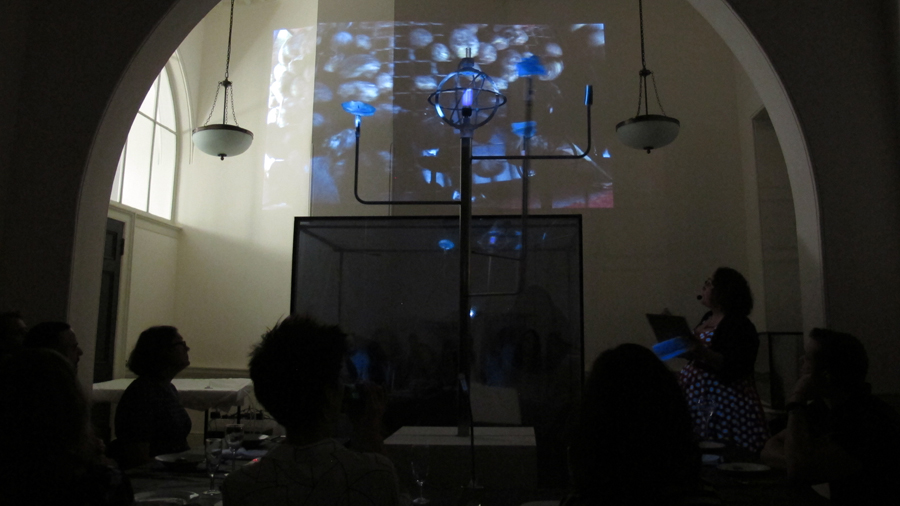
Works create a Dining Experience performance to explore the potential effects of sharing images of food on social media and the ways food in the future might evolve in unexpected directions as a result.
Food Fictions is a collaboration between King's College London's Department of Geography and Somerset House Studios residents Burton Nitta, brokered and supported by the Cultural Institute at King's in partnership with Somerset House Studios.
Caution -
looking at this food might lead to hunger, weight gain and over stimulation.
Adults only.
Food Porn and the #foodporn label is linked to images of food shared mainly on the Instagram social media platform. Food Porn images are often complex assemblages of food sources, culinary skills, colour, texture, movement, people and places.
Might Food Porn images shared through social media actually be harmful? Professor Charles Spence from the University of Oxford, considers the risks:
What may seem a harmless act of sharing images of food may have unseen consequences. Looking at images of food makes us hungry which promotes food craving, seeking-out food and eating. People who regularly look at food images tend to have higher BMI levels.
Food Porn, such as dishes made by TV chefs, ‘freakshakes' or Starbucks’ Unicorn Frappuccino tend to be higher in calories. Looking at images of food drains our mental processes as our brains deal with images and physical food in a similar way.
However, exploring our food through the camera lens before eating gives us a greater taste appreciation of the food. The imagery of food increases our anticipation and when we finally eat the food it can taste better than it actually does. Also, images of food shared through social media can encourage us to try different food types and be more adventurous in what we make.
So discovering the effects of food images on our behaviour - do we need to take more care with what we share, view and the consequences?
Course2 Lunar Potato
Fresh from the space elevator, Maggie May’s moon potatoes whipped into these mouthwatering Lunar Cycles.
The Lunar Potato scenario explores food narratives that are influenced by politics and identity.
Earlier this year an intriguing photo call was constructed - Theresa May on her campaign trail was photographed eating chips on the street. For the conservative media strategy - the street chip scenario was clearly intended to remove any sign of a silver spoon and appeal to the general populous - ‘vote for me - I’m just like you!’
In terms of Food Fictions, by using certain foods within images can we be influenced in our decision making and certain messages be conveyed- sometimes subliminally? The potato chips in the UK were used to connect with a wide demographic and relate to national identity.
In contrast, in China, the government is attempting to change the narrative around potatoes. Traditionally the potato was considered a ‘poor-food’ in comparison to rice. With a growing population, the government is trying to change this image as in comparison to rice, potatoes are a more nutritious carb food which grows in less fertile soil. In response, Sister Potato, a singer and potato advocate promotes the benefits of the spud. Chinese scientists have also launched a lunar mission to grow potatoes on the moon to test the viability of potatoes to sustain a future human colony. Incidentally, this image change echoes the science fiction film The Martian where an astronaut farms potatoes to survive.
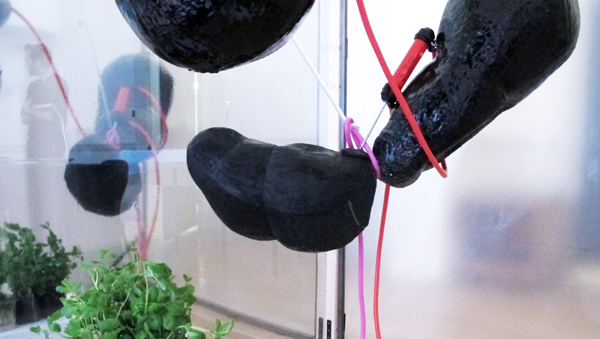
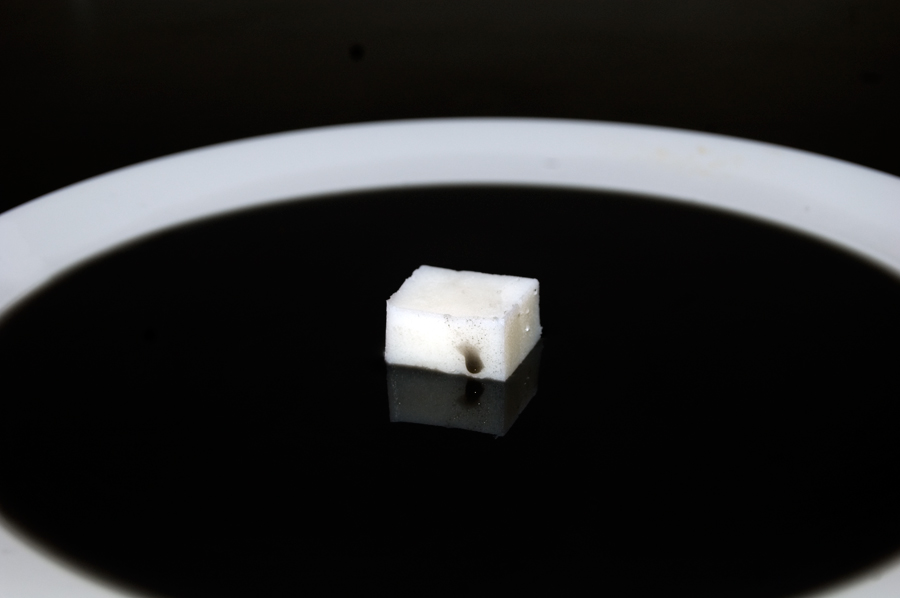
Lunar Potato imagines new foods created from the first potato crop grown from on the moon. Through new extraction and culinary processes, the potatoes material properties are utilised to create new dining potentials.
Course3 Vegan Bodybuilding
More than food, this is a way of life. Get the results you want with humane eating and the perfect workout. Share your success. Inspire to eat clean.
Course4 Stellar Meat
Back from extinction, this supreme joint of Stellar's sea cow - the tastiest meat you will ever savour!
After discovering the Stellar Sea Cow living around the Commander Islands in 1741 and soon developed a taste for their almond-flavoured meat, within 27 years humans had pushed them to extinction. If CRISPR technology presents an opportunity to taste their meat again through a process of de-extinction, should we resurrect this mega-fauna species to savour again what was thought to be the tastiest meat ever consumed?